








What Is A Registered Agent And Do You Need One? A Guide For US Business Owners
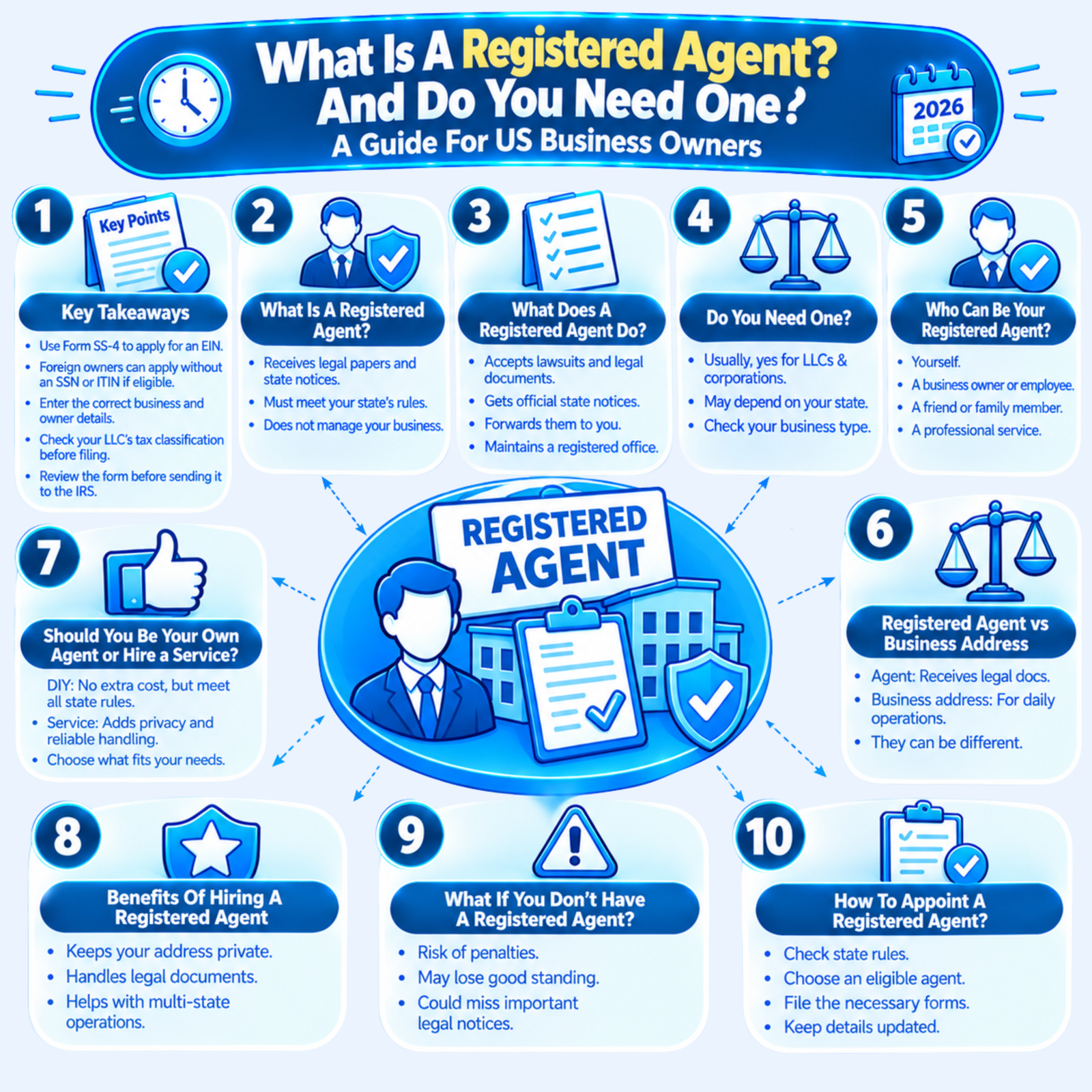
- 1
Most states require LLCs and corporations to have a registered agent. - 2
A registered agent receives legal papers and state notices for your business. - 3
You can act as your own agent or hire a service. - 4
A professional service may help keep your home address private. - 5
Your agent must meet your state’s rules. - 6
You’re still responsible for legal notices and filing deadlines. - 7
Update your agent’s details with the state if they change.
Starting a business in the US involves more than filing formation documents. You also need to know who will receive legal papers and official state notices on your company’s behalf. For most LLCs and corporations, that responsibility belongs to a registered agent.
Most states require LLCs and corporations to appoint a registered agent. You may be able to serve as your own agent or hire a professional service. Before you choose, find out what your state requires and be honest about whether you can reliably take delivery of important mail.
What Is A Registered Agent?
A registered agent is the person or business your company names to accept lawsuit papers, legal demands, and mail from the state.
The agent has to meet the rules of the state where your business is registered. If you form an LLC in Texas. For example, your agent needs a registered office in Texas. Other states set their own rules about who qualifies and which addresses count.
A registered agent does not manage your business or automatically handle its taxes and filings. The role is limited to receiving legal documents and other official notices covered by applicable state rules or the service agreement.
What Does A Registered Agent Do?
A registered agent’s job comes down to catching important paperwork and passing it along.
1. Receive Legal Documents
The agent accepts service of process, the formal handoff of court papers such as a lawsuit notice. Once it arrives, the agent sends it on to you as the state rules or your service agreement require.
2. Receive Official State Notice
Your state’s business filing office may also send notice to the agent, usually about registration and compliance. Which notice go to the agent differs from state to state.
3. Forward Documents To You
Receiving the documents is only part of the process. The agent must forward them according to the applicable requirements or service agreement. You remain responsible for responding to legal notices and meeting relevant deadlines. Responding to a lawsuit or meeting a filing deadline is still your responsibility.
4. Maintains A Registered Office
The agent needs an address the state accepts. In many states that means a physical street address where someone is available during business hours. A P.O. box on its own usually won’t work.
Do You Need A Registered Agent For Your LLC Or Corporation?
In most states, yes! You name your agent when you file your formation documents or when you register an existing company in a new state. Some states call the role a statutory agent or an agent for service of process, but it’s the same idea.
| Business Situation | Do You Need A Registered Agent? |
| Forming an LLC | Usually, yes. State law typically requires one. |
| Forming a corporation | Usually, yes. |
| Registering an existing LLC in another state | Possibly, if that state requires you to qualify as a foreign entity. |
| Sole proprietor with no separate entity | Usually not just for being a sole proprietor, though other registration rules may apply. |
| General partnership | Depends on your state and how the partnership is structured. |
Before you file, look up the Secretary of State website (or the equivalent agency) for the state where you’re operating. Rules in one state don’t carry over to another.
SUGGESTED: Do You Need a US Address to Form an LLC? Requirements for Non-US Residents
Who Can Be Your Registered Agent?
You can choose from many registered-agent options, depending on your state’s eligibility requirements.
1. Yourself
If you meet the state’s eligibility and address requirements, you can be your own agent. It saves money, but you’ll need to be at the registered office during business hours to accept documents.
2. A Business Owner or Employee
Some states let an owner, officer, manager, or employee do it. The company still needs a registered office that qualifies.
3. A Friend or Family Member
A friend or family member may serve as your registered agent if they meet your state’s requirements and agree to the role. Choose someone who can reliably receive documents and notify you promptly when legal papers arrive.
4. A Professional Registered Agent Service
A service receives your documents and forwards them to you. This tends to work well if you work remotely, travel a lot, or just don’t want to deal with it. Keep in mind that hiring one doesn’t hand off your legal responsibilities. You still have to respond to notices and follow state law.
What Is The Difference Between A Registered Agent And A Business Address?
They do different jobs! The registered agent receives formal legal documents. Your business address is for everyday correspondence, operations, or other filings.
The two can be in the same location, but they don’t have to be. What matter is that the registered office meets your state’s rules.
Be careful with virtual offices and mailbox services. Some states don’t accept a mailbox-only address, and others attach conditions. Confirm before you put one on your formation documents.
Should You Be Your Own Registered Agent Or Hire A Service?
Both work. It comes down to where you live, how much you’re out of the office, how much you care about privacy, and whether you can reliably receive documents.
| Factor | Your own registered agent | Professional service |
| Cost | No separate service fee | Usually a recurring fee |
| Availability | You have to meet the state’s availability requirements | The provider handles receipt at its own registered office |
| Privacy | Your address may show up in public records | You may be able to use the provider’s address instead |
| Document handling | You receive and forward everything yourself | The provider forwards documents per its service terms |
| Travel and remote work | Hard if you’re often away | Easier if you travel or live elsewhere |
If you go solo, be honest about whether you can keep it up consistently. If you hire someone, read the fine print on fees, how documents are delivered, renewal terms, and what happens when something urgent comes in.
What Are The Benefits Of Hiring A Registered Agent Service?
A registered agent service can take over the job of receiving your paperwork, which matters most when you can’t be at the registered office yourself.
1. Protects Your Privacy
Many states publish the registered agent’s name and address. If you hire a service, you can often list its address as your registered office, so your home address stays off that record. Other filings, though, may still ask for your own personal or business address.
2. Improves Legal Document Handling
A service gives your company one dependable address for lawsuits and state mail. It sends what arrives on to you following its own procedures, which helps if you travel a lot or work from different places. Reading each item quickly and meeting the deadlines still falls to you.
3. Simplifies Multi-State Operations
If you have to register in more than one state, you’ll need an agent in each. Many providers cover multiple states, so you don’t have to line up a separate person in every location.
A service won’t handle your state filings, taxes, licenses, or annual reports on its own, though. That’s a different job.
What Happens If Your Business Does Not Have A Registered Agent?
Failing to maintain a registered agent when state law requires one can affect your company’s compliance status. Depending on the state and the circumstances, the consequences may include penalties, loss of good standing, or suspension of the company’s authority to do business.
The bigger danger is practical. If nobody receives or forwards a lawsuit notice, you could miss your deadline to respond. And the case doesn’t stop just because you didn’t know about it. Depending on the law and the procedure, a court may move ahead without you.
If your agent resigns, moves away, or becomes ineligible, find a replacement and file the change with the state. Don’t count on the state to update its records for you.
How Do You Appoint A Registered Agent?
The details differ by state, but the process looks about the same everywhere.
Step 1: Check Your State’s Requirements
Go to the official state business registration website. Find out who can serve, which addresses are accepted, and whether the agent has to formally consent.
Step 2: Choose An Eligible Agent
Decide whether you’ll do it yourself, name someone else, or hire a service. Make sure whoever you pick has agreed to take the role.
Step 3: Add The Agent To Your Filing
Your formation documents will ask for the agent’s name and registered office address. Follow the state’s instructions closely.
Step 4: Submit Your Paperwork
File with the state and pay the filing fees. If you’re using a service, its fee is separate from the state’s unless the provider’s package says otherwise.
Step 5: Keep Everything Current
If the agent or registered office changes, file an update with the state. Also keep your own contact information up to date with your agent so documents reach you without delay.
SUGGESTED: How To Open A US LLC As A Non-Resident: Step-by-Step Guide
Do You Need A Registered Agent If You Live Outside The United States?
Yes, you still do if you form a US LLC or corporation. The requirement comes from the state where the company is formed, not from where you live. A non-US resident forming an LLC in a state that requires an agent will generally need one with an address in that state. Living abroad doesn’t get you out of it.
For most people in that position, a professional service is the practical route, since they probably can’t meet a local address or availability requirement themselves. Just make sure the provider’s address qualifies under the state’s rules. And keep in mind that a registered agent doesn’t give you immigration status, take care of your US or state taxes, or cover everything else involved in running a US business from overseas.
How Much Does A Registered Agent Cost?
It depends on which route you take.
-
- Being your own agent: No service fee, but you still have to meet every state requirement.
- Hiring a service: Expect a recurring fee. The price varies by provider, by how many states they cover, and by what extras are included.
- Changing your agent: Some states charge a filing fee for the change.
Check current provider pricing and your state’s fee schedule before deciding. Compare the services included in each package, such as document forwarding, compliance reminders, and multi-state coverage.
Official Resources:
Frequently Asked Questions
Is a registered agent legally required for an LLC?
In most states, yes. Check your state’s official business filing rules to be sure.
Can I use my home address as my registered-agent address?
Possibly, if it meets your state’s requirements and you’re eligible to serve. Just remember it may become part of the public record.
Can a registered agent be located in another state?
No, the agent needs a qualifying address in the state where your company is registered. Providers that operate in several states often keep a separate registered office in each one.
Does a registered agent receive all business mail?
No. The agent handles service of process and other documents covered by the rules or your service agreement. Regular business mail should go to a separate mailing address.
Can I change my registered agent after forming my LLC?
Yes. Follow your state’s procedure and file the required form or amendment. Make sure the new agent is eligible and has agreed to serve.
Is a registered agent the same as an organizer or LLC owner?
No, they’re three different roles. An organizer prepares or submits the documents that create the LLC. An owner (called a member) holds an ownership stake. A registered agent receives legal documents and official notices. One person can wear more than one hat if state law allows it.
Does a registered agent file taxes or annual reports for my business?
No, some providers sell compliance services on top, but the registered-agent role by itself doesn’t cover taxes or annual reports. Read your service agreement and keep track of your own deadlines.
What is the difference between a registered agent and a statutory agent?
Mostly just the name. Both receive legal documents for a business, and the term used depends on the state. Go by the official definition from the state where your company is registered.

What Is a Registered Agent? Requirements for US Business Owners
Learn what a registered agent does, who can serve, state requirements, service costs, and how to choose the right option for your US LLC or corporation.





How to Calculate Business Profit Margin: Formulas & Examples
November 5, 2026[…] What Is A Registered Agent And Do You Need One? A Guide For US Business Owners Explains the role of a registered agent in maintaining an LLC’s legal compliance and […]
How to Prepare a Cash Flow Statement for Small Business
November 5, 2026[…] What Is A Registered Agent And Do You Need One? A Guide For US Business Owners Explains registered agent responsibilities, legal compliance, and associated service costs. Helps […]