






How To Fill Out Form SS-4 As A Foreign Owner (Line by Line)
- 1
Use Form SS-4 to apply for an EIN. - 2
Foreign owners can apply without an SSN or ITIN if eligible. - 3
Enter the correct business and owner details. - 4
Check your LLC’s tax classification before filing. - 5
Review the form before sending it to the IRS.
If you own a US LLC or another US business from outside the country, you will probably need an Employer Identification Number (EIN) at some point. It is how the IRS tracks your business for tax reporting, and banks often ask for it too. You get one by filing Form SS-4, the Application for Employer Identification Number.
The form is simple for US residents, but foreign owners tend to get stuck in the same places. Which address goes in if you live abroad? What do you write on Line 7b when you have no SSN or ITIN? How do you describe a single-member LLC?
The answers depend on how your business is structured, who owns it, and why you want the EIN. Below, I go through the form line by line and point out the entries that usually trip up foreign owners. Everything follows the IRS’s own instructions, but check your specific situation before you submit anything.
What Is Form SS-4 And Why Does A Foreign Owner Need It?
Form SS-4 is how you request an EIN, the nine-digit federal tax number the IRS assigns to businesses and other entities. You may need one to file business tax returns, report employment taxes, open certain business bank accounts, or meet other federal requirements.
Foreign owners usually run into it right after setting up a US LLC or corporation. That said, owning an LLC does not mean you need an EIN for every purpose. Whether you need one depends on the entity’s structure and its tax obligations.
Both the current form and its instructions are free on the IRS website:
Always use the instructions that match the version of the form you are submitting.
How To Fill Out Form SS-4 Line By Line As A Foreign Owner
Each section below covers one line or a small group of lines. The examples mostly assume a foreign individual who owns a US LLC. Corporations, partnerships, and other entity types will have some different entries.
Lines 1-3: Enter Your Business And Contact Person Name
Line 1 · Legal name | Line 2 · Trade name | Line 3 · Care of
Line 1: Legal name of the entity
Write the full legal name exactly as it appears on your formation documents. If you are applying as a sole proprietor, use your own legal name, not the name of your business.
If your LLC is registered as ABC Consulting LLC, that is what goes here.
Line 2: Trade name of business
Fill this in only if you operate under a DBA or trade name that differs from Line 1. If you don’t, leave it blank.
Line 3: Executor, administrator, trustee, or care-of name
Use this line when the IRS should send mail through a specific person. Your registered agent does not belong here by default.
Lines 4a-4b: Enter Your Mailing Address
Line 4a · Street address or P.O. box | Line 4b · City, state, ZIP or international postal details
This is where the IRS will send letters about the business. An address outside the U.S. is fine.
For a foreign address, include:
-
- Street address, if you have one
- City
- Province or state
- Postal code
- The full country name, spelled out
If you are in India, for example, you would write your city, state, PIN code, and “India.”
Pick an address where mail actually reaches you. If you entered a care-of name on Line 3, check the IRS instructions on how the mailing address should look.
Lines 5a-5b: Enter Your Business’s Physical Address
These lines are for the business’s physical address and should be filled in only if it differs from the mailing address above.
A P.O. box is not accepted here. If the business is physically located outside the US, enter the city, province or state, postal code, and full country name. If the physical and mailing addresses are the same, leave Lines 5a–5b blank.
Line 6: Enter The County And State Where Your Business Is Located
Line 6 asks for the county and state where the principal business is physically located.
Foreign owners sometimes enter the state where their LLC was formed, even when the business operates elsewhere. The state of registration and the actual business location can be different. If your business has no physical location in the US, check the current IRS instructions for the appropriate entry.
Lines 7a-7b: Identify the Responsible Party
For foreign owners, this is the part of the form that matters most.
Line 7a: Name of the responsible party
Enter the full name of the person who ultimately owns or controls the business. In a single-member LLC owned directly by a foreign individual, that is usually the owner. A registered agent or formation service that handles your paperwork is not the responsible party just because it files things for you.
Line 7b: SSN, ITIN, or EIN of the responsible party
If the responsible party has an SSN or ITIN, enter it. If they have none and cannot get one, the IRS allows “foreign” or “N/A.” The line cannot be left empty.
Don’t make up a number, and don’t put your company’s EIN here in place of a personal one. The responsible party is normally an individual, and the IRS has specific rules for this line. And if you do already have an SSN or ITIN, use it rather than falling back on the foreign-owner exception.
Lines 8a-8c: Answer the LLC Questions
Complete this section only if the applicant is an LLC.
| Line | What you need to enter |
| 8a | Indicate whether the applicant is an LLC. |
| 8b | If you answer Yes, enter the number of LLC members. |
| 8c | Indicate whether the LLC was organized in the United States. |
Take a single-member LLC formed in Delaware. You would answer Yes on 8a, enter 1 on 8b, and answer Yes on 8c.
If the LLC was formed under another country’s laws, 8c changes. These questions are about where and how the entity was legally formed. Your citizenship or where you live has no bearing on them.
Line 9a: Select Your Type Of Entity
Line 9a asks for the entity’s federal tax classification, which is not the same as simply being a US LLC.
Here is how the common cases work:
-
- Single-member US LLC: If it is treated as a disregarded entity, select “Other” and write “disregarded entity.” If the LLC is requesting an EIN to file Form 5472 as a foreign-owned US disregarded entity, use the specific wording explained below.
- Multi-member US LLC: A domestic LLC with two or more members generally selects “Partnership” if it follows the default classification.
- Corporation: Select this option if the applicant is a corporation or the LLC has elected corporate tax treatment. Follow the instructions for the tax return you will file.
- Sole proprietor: Select this option if the applicant is a sole proprietor and your situation fits the form’s instructions.
An LLC’s default classification depends on its ownership, how it was formed, and whether it has made a tax election. A US LLC does not automatically become a corporation because its owner lives abroad.
S corporation status has separate eligibility rules, including restrictions on nonresident alien shareholders. Check these requirements before making an election.
Line 9b: Enter State Or Foreign Country Information
Line 9b is for the state or foreign country where a corporation was incorporated. It applies only if your entity type calls for it.
If you are applying for an LLC and not a corporation, follow the instructions for the entity type you picked. The state where the LLC was organized does not make it a corporation for tax purposes.
Line 10: State Your Reason For Applying For An EIN
Choose the reason that best matches why you need the EIN. Options include starting a new business, hiring employees, banking purposes, changing the type of organization, and other specific situations.
If you have just formed a US LLC and need an EIN to start a business, select “Started a new business” if that accurately describes your situation. If you select “Other,” state the actual reason in the space provided.
A foreign-owned US disregarded entity required to file Form 5472 should select “Other” and enter “Foreign-owned US disregarded entity filing Form 5472.” Use this wording only when it applies to your situation.
Line 11: Enter The Date Your Business Started Or Was Acquired
Enter the date the business started or was acquired, whichever applies to your situation.
For a new LLC, think about when the business actually began operating. The day you sat down to fill out the SS-4 isn’t the answer, and neither is the day you first called the IRS. Whatever date you use should line up with your formation and business records.
Line 12: Select Your Accounting Year-End Month
This is the month your accounting year closes. Most businesses use December, which is the right answer if you follow a calendar tax year. If your entity has a different permitted fiscal year, enter that closing month instead.
Don’t pick a fiscal year just because it is convenient. Make sure your entity is allowed to use it.
Line 13: Enter the Number Of Employees You Expect To Hire
Enter the highest number of employees you expect to have over the next 12 months. The form splits them into agricultural, household, and other.
If you don’t plan to hire anyone, put zero in each category. Owning the LLC does not make you an employee of it, so don’t count yourself. If you do expect to hire, give a realistic estimate based on your plans. The IRS uses this number to work out which employment tax rules may apply.
Line 14: Check Whether You Want To File Form 944
Some small employers can file Form 944 once a year instead of Form 941 every quarter. Line 14 is about that.
It isn’t a general election open to every business, so answer based on your employment tax situation. If you don’t expect to pay employees, it may not apply at all. Don’t ask for annual filing just because it sounds easier.
Line 15: Enter the First Date You Paid Wages or Annuities
Enter the date you first paid, or expect to first pay, wages to employees or annuities.
If you won’t be paying employees, the form’s instructions explain how to show that the question doesn’t apply. And keep this separate from your business start date, since the two are often different. If you plan to hire later, use the date you realistically expect to make the first payment.
Line 16: Describe Your Business’s Main Activity
Pick the category that best matches what the business mainly does. The form lists construction, real estate, rental and leasing, manufacturing, transportation, finance and insurance, health care, retail, and others.
A software development LLC would choose whichever listed category fits those services best. If nothing fits, use “Other.” Base your choice on what the business does, not on what the company is called.
Line 17: Provide More Details About Your Business Activity
Here you describe the main goods sold, services provided, or other activity.
A software company might write “software development and consulting services.” A business selling physical goods should name what it sells. Be specific enough that someone at the IRS understands what the company does. Vague wording doesn’t help.
Line 18: State Whether the Applicant Has Previously Received an EIN
Say whether the entity named on Line 1 has ever applied for and received an EIN. If it never has, answer No. If it has, answer Yes and give the details requested.
If you’ve lost the number, don’t apply for a new one. What you should do depends on whether the entity already has an EIN and whether its legal structure has changed.
How To Sign Form SS-4 And Authorize A Third Party
Signature: The person who signs must have authority to sign for the applicant. Depending on the entity, that could be the individual applicant, a principal corporate officer, an authorized member or officer, or someone else the IRS instructions allow. Foreign applicants can have a duly authorized person sign for them.
Third-party designee: If you want someone else to discuss the application with the IRS and receive the EIN for you, fill out this section. It is optional, and it only works if you complete the authorization and signature fields. If you don’t want a designer, the form’s instructions explain how to leave it blank.
Frequently Asked Questions
-
- Can a foreign owner apply for an EIN without an SSN?
Yes. If the responsible party has no SSN or ITIN and can’t get one, the IRS says to enter “foreign” or “N/A” on Line 7b. - Can I apply for an EIN online if I live outside the United States?
Not if you have no legal residence, principal place of business, or principal office or agency in the US or its territories. You would apply by phone, fax, or mail under the international procedures. - What should I write on Line 7b if I do not have an ITIN?
Write “foreign” or “N/A,” as long as you also have no SSN and can’t get either number. Don’t leave it blank, and don’t invent a number. - Does a single-member LLC need an EIN?
It depends on the LLC’s situation and tax obligations. By default, a single-member LLC is a disregarded entity for federal income tax, but it may still need an EIN for employment taxes, certain excise taxes, or other reasons. - How long does it take to receive an EIN through Form SS-4?
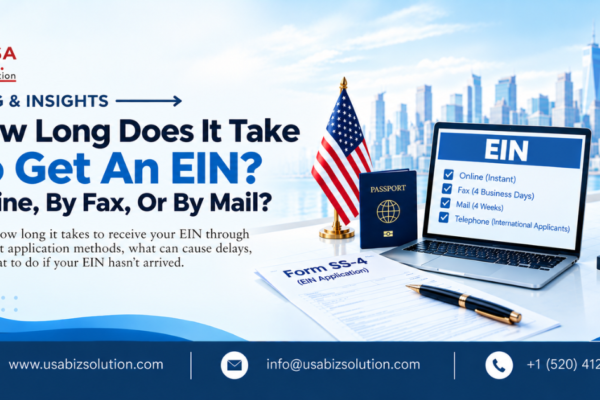
The IRS generally advises allowing about four business days for fax applications and approximately four weeks for mailed applications. Processing times can change, so check the IRS website for current estimates before applying. International applicants can also apply by phone. - Is there a fee to submit Form SS-4 directly to the IRS?
No. The IRS charges nothing for an EIN, and you can submit the form yourself through any approved method. Third-party services may charge their own fees for help with the paperwork. - What happens if I make a mistake on Form SS-4?
A mistake or missing information can delay processing, or the IRS may contact you for clarification. Review the form carefully before sending it. If you’ve already applied, get in touch with the IRS through the proper channel rather than filing a second application for the same entity.
- Can a foreign owner apply for an EIN without an SSN?
Conclusion
Filling out Form SS-4 as a foreign owner involves three key elements: accurate business details, the right responsible-party information, and the correct federal tax classification. Take extra care with Lines 7a-7b, the LLC questions, and your reason for applying. Before you send it, check the current IRS instructions and choose the submission method that fits where you are.Official Resources:
IRS Form SS-4: Application for Employer Identification Number
IRS Instructions for Form SS-4
IRS (Employer Identification Number (EIN))
IRS (Responsible Parties and Nominees)
IRS (Single-Member Limited Liability Companies)
IRS (LLC Filing as a Corporation or Partnership)
IRS (Form 8822-B: Change of Address or Responsible Party)
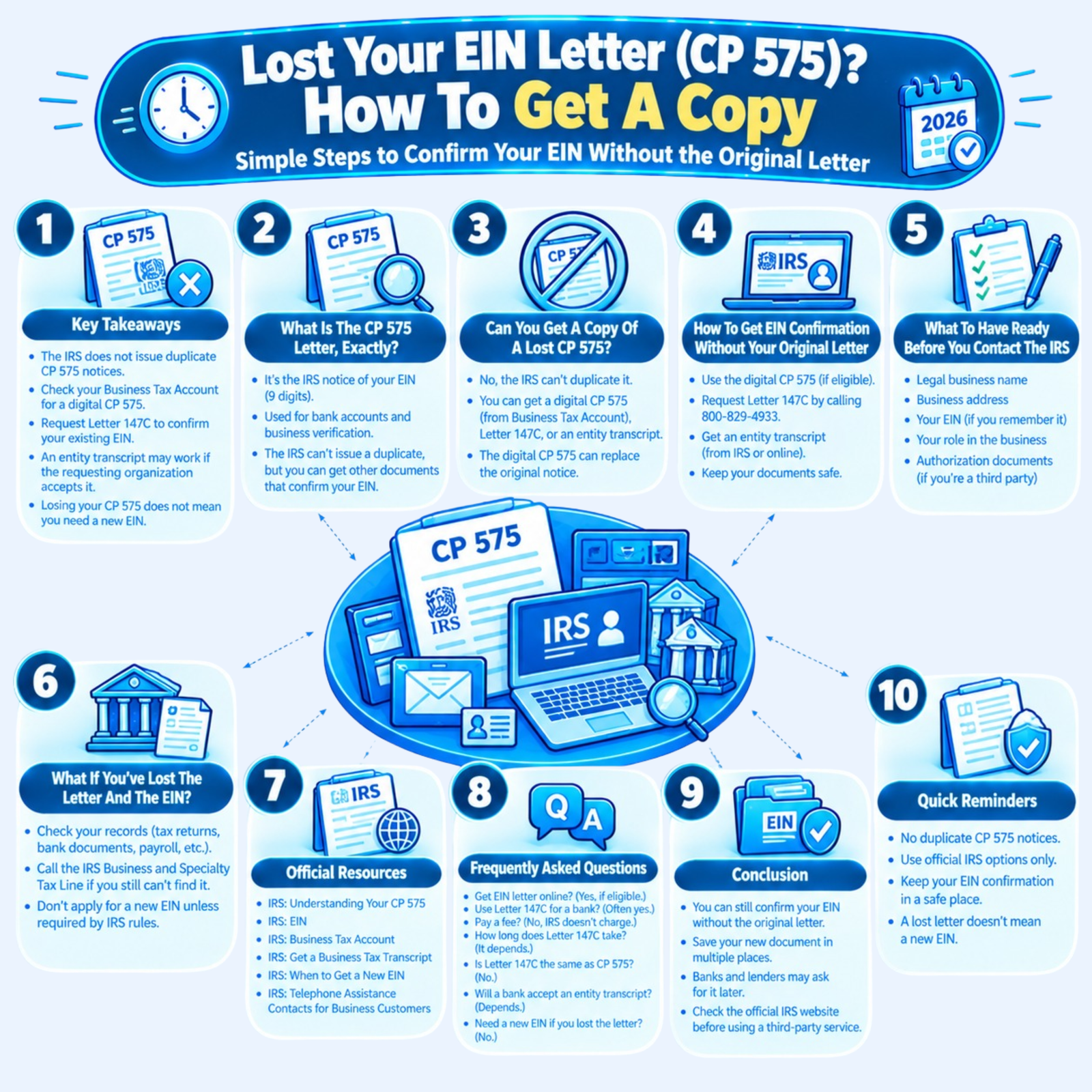
 Lost Your EIN Letter (CP 575)? How to Get Confirmation
Learn how to recover EIN confirmation through the IRS Business Tax Account, Letter 147C, or an entity transcript.